
September 30, 2026
What Is an ISO Container? Sizes, Types and Uses
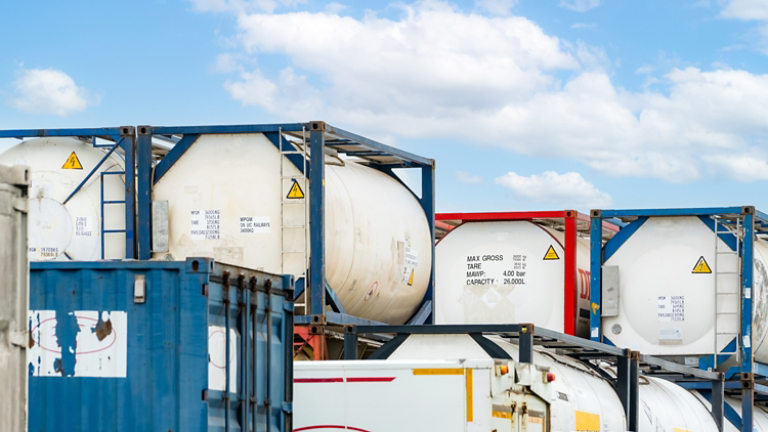
ISO containers help make global transportation simpler and more efficient. Their standardized design allows cargo to move by truck, rail, and ship without changing containers along the way.
But what is an ISO container? How big is one? And what makes refrigerated ISO containers different? Here are some of the most common questions.
What is an ISO container?
An ISO container is a standardized cargo container designed to meet specifications established by the International Organization for Standardization (ISO). These standards allow containers to move between trucks, trains, and ships using compatible transportation and handling equipment.
ISO containers are built to handle demanding transportation environments and heavy loads. Their standardized design also makes them useful for a wide range of specialized applications.
How did ISO containers improve shipping?
The modern shipping container emerged in the 1950s as a more efficient way to move cargo. Standardized containers later gained widespread use as organizations recognized the advantages of moving goods without repeatedly unloading and reloading them between transportation modes.
Today, ISO shipping container standards make intermodal transportation possible worldwide. Cargo can remain in the same container as it moves from ship to rail to truck, simplifying handling and improving transportation efficiency.
What are standard ISO container dimensions?
A standard 20-foot-long ISO container is 8 feet wide and 8.5 feet high, while a standard 40-foot-long ISO container is 8 feet wide and 9.5 feet high. 40-foot containers are by far the most commonly used in international shipping.
Standard ISO container dimensions allow containers to work with compatible ships, railcars, trucks, cranes, and other handling equipment around the world.
How big is an ISO container?
ISO container size varies by configuration and application, but 20-foot and 40-foot containers are widely used for global shipping.
Specialized ISO containers can use these standard dimensions while adding features designed for specific cargo, such as refrigeration equipment, tanks, or alternative loading configurations.
What are the benefits of ISO containers?
ISO containers offer several advantages for global transportation.
- Efficiency: Standard dimensions make it easier to transfer containers between ships, trains and trucks without unloading the cargo.
- Durability: Steel construction helps ISO containers withstand demanding transportation and environmental conditions.
- Versatility: ISO containers can transport everything from general freight to temperature-sensitive products. Their standardized structure can also be adapted for specialized applications.
What types of ISO containers are available?
Several ISO container types are designed for different kinds of cargo and transportation needs.
- Dry storage containers are commonly used for general freight that does not require temperature control.
- Refrigerated containers maintain temperature-controlled environments for products such as food, pharmaceuticals, and other sensitive cargo.
- Open top containers accommodate cargo where top-loading of cargo is preferred.
- Flat rack containers provide an open configuration for oversized or unusually shaped loads.
- Open side containers provide additional side access for loading long or difficult-to-handle cargo.
- Tank containers transport liquids and other bulk materials within a standardized ISO frame.
What is an ISO tank container?
An ISO tank container uses a tank mounted within a standardized ISO frame to transport bulk liquids and other materials.
Depending on the cargo, temperature-sensitive tank container applications may require specialized heating or refrigeration. Klinge containers can provide temperature control for products such as chemicals, pharmaceuticals, food products, and beverages.
What are the different ISO tank container types?
ISO tank container types vary based on the cargo and operating requirements. Different configurations can be used for chemicals, pharmaceuticals, food-grade products, and other bulk liquids.
For temperature-sensitive cargo, the refrigeration system must also be selected based on the required temperature range, operating environment, and transportation needs.
What is a refrigerated ISO container?
A refrigerated ISO container combines an insulated shipping container with a refrigeration system to maintain required cargo temperatures during transportation or storage.
Refrigerated containers support temperature-sensitive applications across food, pharmaceutical, chemical, military, and other industries.
What products can be transported in refrigerated ISO containers?
Refrigerated ISO containers can support many types of temperature-sensitive cargo, depending on the refrigeration system and container configuration.
Common applications include food and beverages, pharmaceuticals and medical supplies, chemicals, military supplies, and other products that require controlled temperatures during transportation or storage.
Specialized applications may require additional capabilities such as ultra-low temperatures, dual redundant refrigeration, explosion-proof components, or backup power.
How do you choose the right ISO container?
Start with the cargo. Its size, temperature requirements, transportation mode, operating environment, and storage needs will help determine the right ISO container and refrigeration configuration.
For temperature-sensitive cargo, Klinge solutions offer specialized transport refrigeration solutions designed for a range of applications and operating conditions.
Summary
Learn what an ISO container is, common sizes and types, how ISO standards improved global shipping, and how refrigerated containers protect sensitive cargo.